
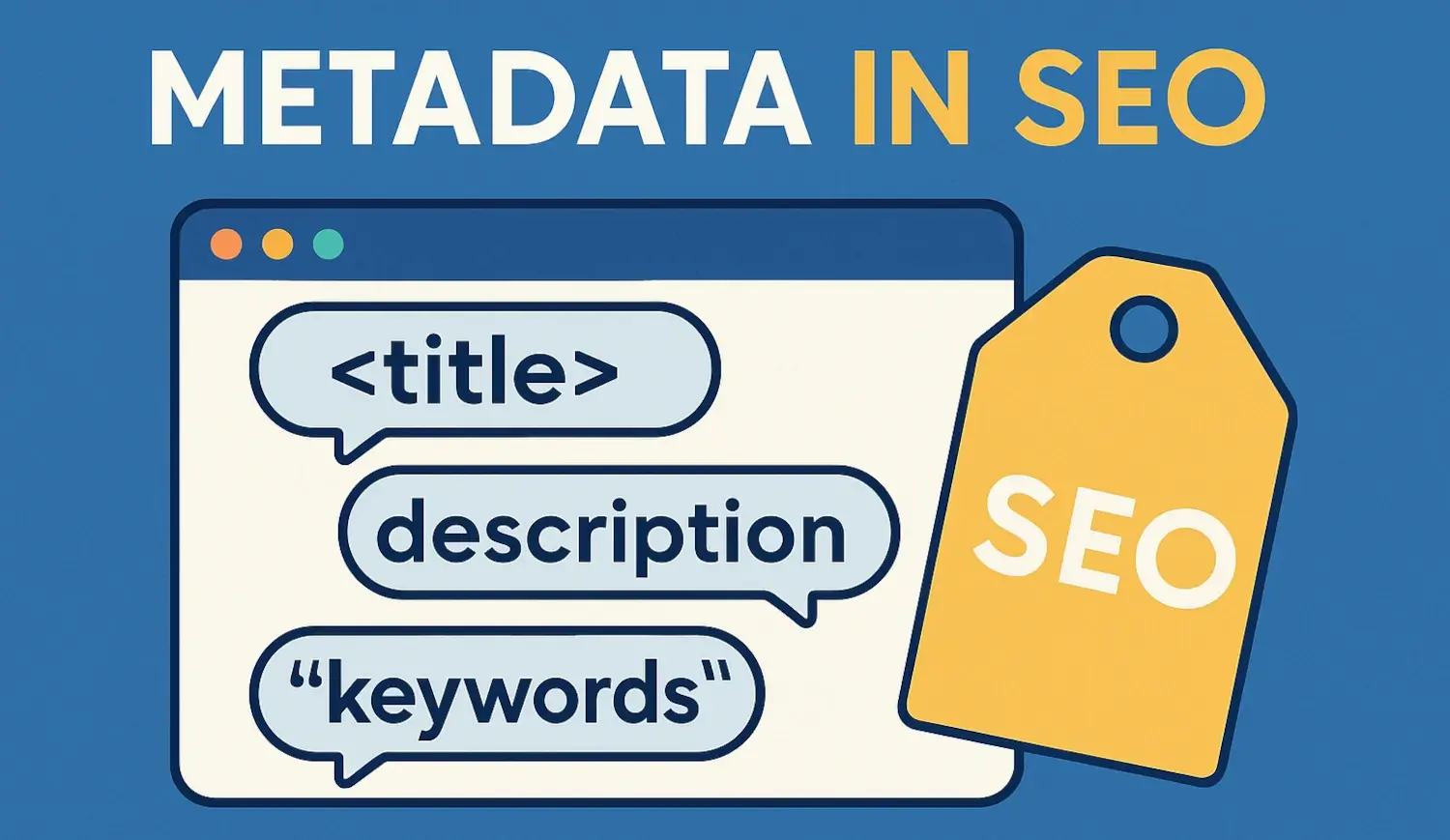
What Is Metadata in SEO?
When you search for something online, what makes you click one result over the other?
It’s often the title and short description you see in the search results — that’s metadata in action. It gives search engines context about your page and helps people decide if your content is worth their time.
Let’s break it down and see how it fits into a strong SEO strategy.
What Is Metadata?
Metadata is information about your web page that isn't always visible on the page itself. It lives in the page’s code and helps search engines understand what the page is about.
The two most common types in SEO are:
- Meta Title (or title tag)
- Meta Description
They appear in search engine results, and they influence both ranking and click-through rate.
Why Does Metadata Matter for SEO?
Search engines like Google use metadata to:
- Understand the content on your page
- Decide how to index and rank it
- Display your page attractively in search results
Good metadata improves your visibility. It also improves how many people actually click your page when they see it.
Think of metadata as your website’s shop window. If it looks clear and helpful, more people walk in.
Meta Titles: Short and Focused
The meta title is usually the first thing someone sees in search results. It’s also one of the strongest ranking signals.
Here’s what makes a good title:
- Keep it under 60 characters
- Make it clear and specific
- Include your target keyword
Example:
If you run a bakery in Nairobi, a good title might be:
Order Fresh Cakes Online in Nairobi | Bliss Bakery
Notice it includes the business name, service, and location — all useful details.
A professional web development company in Kenya should always guide clients on crafting strong titles when building or updating websites.
Meta Descriptions: Invite Clicks
The meta description appears below the title. While it doesn't directly impact rankings, it affects how many people click your link.
Good descriptions:
- Are around 150–160 characters
- Mention the page’s value clearly
- Include a keyword naturally
- Use active, human language
Example:
Browse custom cakes for all occasions. Fast delivery in Nairobi. Place your order today with Bliss Bakery.
Clear. Simple. Click-worthy.
Whether you're building an online store, a blog, or a corporate website, your meta description should tell users exactly what they can expect.
How Metadata Works Behind the Scenes
When search engines crawl your website, they check the HTML code for meta tags like:
<title>Affordable USSD App Development in Kenya | The Code Pot Technologies</title>
<meta name="description" content="We develop reliable USSD apps for banks, schools, and businesses in Kenya. Request a custom solution today.">